Cannabis Laws in Tuyen Quang City, Vietnam: Rules, Risks, and Travel Advice
If you are visiting Tuyen Quang city or living in Tuyen Quang province, it is important to understand that cannabis is not legal for recreational use in Vietnam. The same national rules apply in Tuyen Quang as in Hanoi, Ho Chi Minh City, and other Vietnamese locations. Local differences in enforcement or police activity do not create a legal exception.
Vietnam treats cannabis as a controlled narcotic. Possessing, buying, selling, transporting, cultivating, importing, exporting, or using cannabis can lead to administrative action or criminal prosecution, depending on the facts. Foreign visitors may also face detention, investigation, deportation, visa consequences, and difficulty leaving the country while a case is being handled.
This guide explains the practical position in Tuyen Quang city. It is general information, not legal advice. Vietnamese legislation and enforcement practices can change, so anyone involved in an investigation should contact a qualified Vietnamese lawyer and their embassy or consulate.
Is cannabis legal in Tuyen Quang city?
No. Cannabis is not legally available for recreational use in Tuyen Quang city. Vietnam has a national drug-control system rather than a city-by-city cannabis market. Tuyen Quang authorities apply the same central government laws that operate throughout the country.
That means there is no lawful cannabis café, dispensary, social club, or licensed recreational supply in Tuyen Quang. A person cannot make cannabis legal simply by using it privately, obtaining it from an acquaintance, or purchasing it in a place where rumors suggest enforcement is less strict.
The appearance of cannabis products online or in informal markets should not be treated as proof that they are authorized. Sellers may mislabel products, and a transaction can expose both the buyer and the seller to serious risk.
How Vietnamese law classifies cannabis
Vietnam’s narcotics framework places cannabis and cannabis-derived materials under strict control. The Law on Prevention and Control of Narcotic Substances 2021 and related implementing regulations form an important part of the current framework. Government lists of controlled narcotics include the cannabis plant, cannabis resin, and preparations containing controlled cannabis substances.
The legal consequences depend on what happened, the substance involved, the quantity, the person’s role, and any aggravating or mitigating circumstances. Possession is treated differently from trafficking, but neither should be assumed to be harmless. A small amount may still lead to questioning, confiscation, administrative sanctions, or a criminal case where the legal conditions are met.
Use is not made legal by private consumption
Some travelers assume that police only target sellers. That is unsafe advice. Illegal use can itself result in administrative consequences, while evidence of possession, purchase, preparation, or participation in a supply network can create more serious exposure. Drug testing, statements, messages, packaging, money transfers, and witness evidence may all become relevant during an investigation.
Growing cannabis is also prohibited
Cultivating cannabis plants is not a lawful way to obtain personal supply. Planting, tending, harvesting, or keeping plants can attract enforcement action, and larger-scale cultivation or conduct connected with distribution may be treated much more seriously. Do not assume that a plant is permitted because it is grown at home or described as hemp.
What penalties can apply?
Vietnamese law provides both administrative and criminal measures. The outcome is fact-specific, and exact penalties can depend on the substance’s form and weight, the conduct alleged, prior history, and whether the authorities identify an organized or commercial element.
- Use: Illegal drug use may lead to administrative sanctions and other compulsory or supervisory measures under the applicable rules. A positive test can create practical problems even when a person says the consumption occurred elsewhere.
- Possession: Keeping cannabis, cannabis resin, or a cannabis preparation can result in confiscation, questioning, administrative action, or criminal prosecution when statutory conditions are satisfied.
- Purchase and sale: Buying for personal use can provide evidence of possession or acquisition. Selling, brokering, advertising, or arranging supply is substantially more serious.
- Transport: Carrying cannabis by motorbike, car, bus, train, aircraft, parcel, or across a border may be investigated as transportation, particularly when there is evidence of delivery or an organized arrangement.
- Import and export: Bringing cannabis into or out of Vietnam can trigger severe consequences, including customs investigation and criminal proceedings.
- Cultivation and manufacture: Growing plants, extracting resin, producing edibles, or preparing concentrated products may create additional offenses or aggravating circumstances.
For serious narcotics offenses, Vietnamese criminal law can impose long prison terms and, in the most severe categories, very heavy penalties. Do not rely on an online quantity chart without checking the current Vietnamese text and the precise substance involved. Thresholds and classifications may differ between plant material, resin, and preparations, and the authorities determine the evidence used in a case.
Does Tuyen Quang have different local cannabis rules?
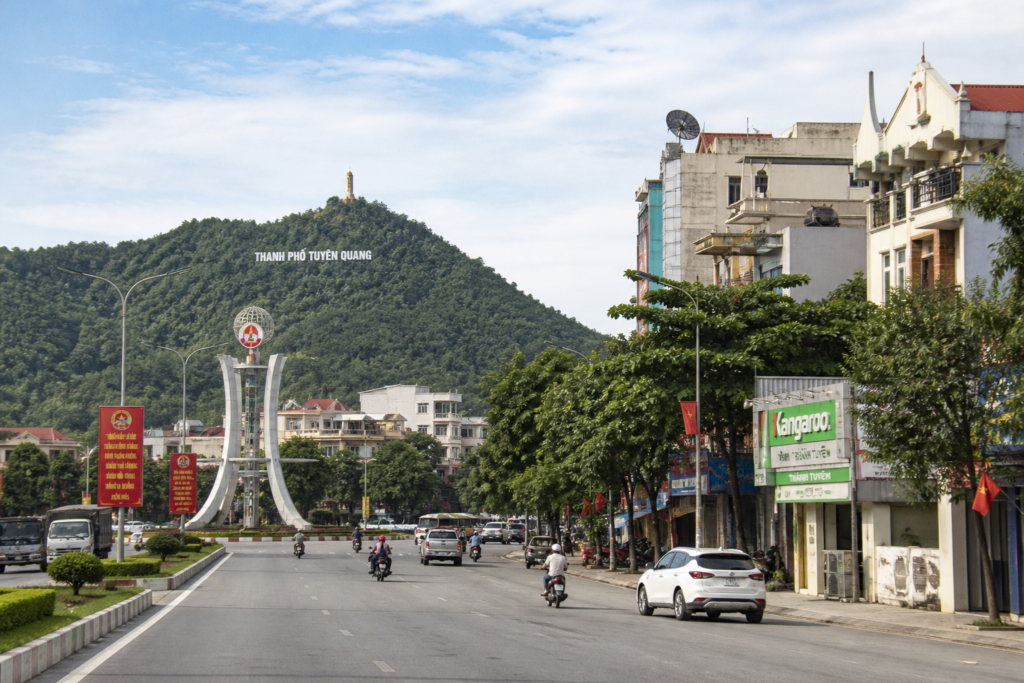
Tuyen Quang city does not have a local recreational cannabis system. Provincial and city-level authorities may conduct drug-prevention campaigns, roadside checks, accommodation inspections, or investigations into suspected supply networks, but local enforcement activity operates within national law.
Police practices can vary in visibility from one district or period to another. That variation should not be interpreted as permission. A lack of visible enforcement in a hotel, nightlife venue, or rural area does not change the underlying legal status.
Travelers heading through Tuyen Quang may also encounter checks on roads connecting the city with other provinces. Carrying a controlled substance between locations creates additional legal and practical risk, even if the intended destination is another Vietnamese city.
CBD, hemp, edibles, and cannabis medicines
CBD is not automatically legal
Products marketed as CBD oil, hemp extract, gummies, vape liquid, or cannabis wellness products should be treated cautiously in Vietnam. A foreign label or claim that a product contains little or no THC does not guarantee that it is lawful. The actual contents may be uncertain, and Vietnamese authorities may rely on laboratory analysis and applicable controlled-substance rules.
Do not bring CBD products into Tuyen Quang or Vietnam without reliable, product-specific legal confirmation from Vietnamese authorities or a qualified lawyer. This includes products purchased legally in another country. International legality does not control Vietnamese border law.
Medical cannabis does not have a broad visitor exemption
Vietnam does not operate a general medical-cannabis access system comparable to countries with licensed dispensaries or patient cards. A prescription, medical authorization, or cannabis card from another country should not be assumed to permit possession in Vietnam.
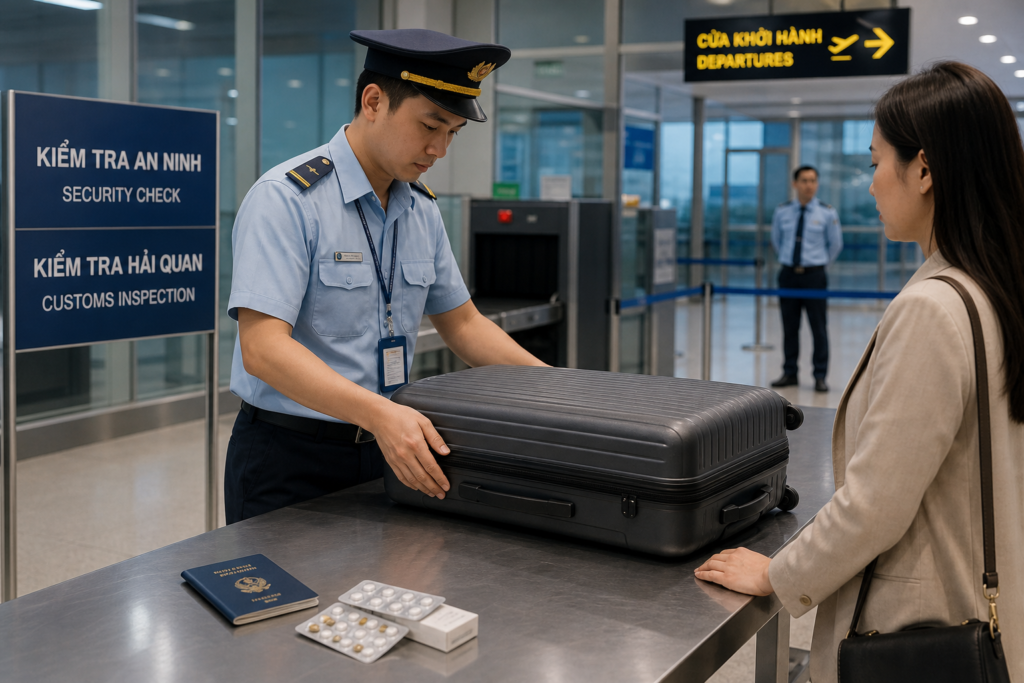
Travelers who use cannabis-based medication should ask their prescribing doctor about non-controlled alternatives and obtain written advice before traveling. They should also check current Vietnamese import requirements directly with an official Vietnamese mission or competent authority. Do not conceal a product in luggage or assume that a prescription will resolve a border issue.
Food and drinks can still contain controlled substances
Cannabis-infused sweets, beverages, tinctures, oils, and vaping products can create the same type of problem as dried cannabis. The form of the product does not make it safe. Homemade or unlabelled items are especially risky because the contents and concentration may be unknown.
Travel advice for visitors to Tuyen Quang
Tuyen Quang is known for its northern Vietnamese landscapes, cultural sites, and routes connecting travelers with other parts of the region. Visitors should plan on the basis that cannabis is prohibited throughout the trip, including at hotels, private homes, guesthouses, parties, and outdoor destinations.
- Do not buy cannabis from street sellers, online accounts, messaging groups, or informal contacts.
- Do not accept a package, bag, edible, vape cartridge, or suitcase from another person when you do not know its contents.
- Do not carry cannabis between Tuyen Quang and Hanoi, Ha Giang, Cao Bang, Yen Bai, or any other destination.
- Check luggage carefully before entering Vietnam and before taking a domestic flight or international connection.
- Keep prescription medicines in original packaging and carry only medicines that meet Vietnamese import requirements.
- Do not drive, ride a motorbike, or operate equipment after consuming any intoxicating substance.
- Remember that police, customs, and border authorities may treat a positive drug test seriously, even if consumption happened before arrival.
Travelers researching rules in nearby northern destinations may also find it useful to read this related overview of cannabis laws in Yen Bai, Vietnam. The key principle is the same: national Vietnamese law applies, rather than a local legalization model.
What to do if police question you
Stay calm, be respectful, and do not argue, resist, sign documents you cannot understand, or make inaccurate statements. Ask what is happening and request an interpreter if communication is difficult. A foreign national should contact their embassy or consulate as soon as practical, although consular staff cannot cancel Vietnamese legal procedures or guarantee release.
Ask to speak with a lawyer who is qualified to advise under Vietnamese law. Avoid relying on a friend, hotel worker, translator, or online poster as a substitute for legal counsel. Do not delete messages, move items, contact potential witnesses to coordinate stories, or attempt to leave the country while authorities are investigating.
If you are stopped at an airport, checkpoint, or accommodation, keep identification and travel documents available. If officials take a statement or conduct a search, request an explanation and an inventory or receipt where appropriate. The precise rights and procedures can depend on whether the matter is an administrative case, criminal investigation, immigration issue, or customs proceeding.
Common misconceptions about cannabis in Vietnam
“It is natural, so it is not a narcotic.”
Natural origin does not determine legal status. Cannabis remains controlled under Vietnam’s drug laws.
“A small amount is always only a fine.”
There is no safe universal rule. The result depends on the substance, quantity, conduct, evidence, and legal classification. Even an administrative case can involve detention, testing, paperwork, expense, and travel disruption.
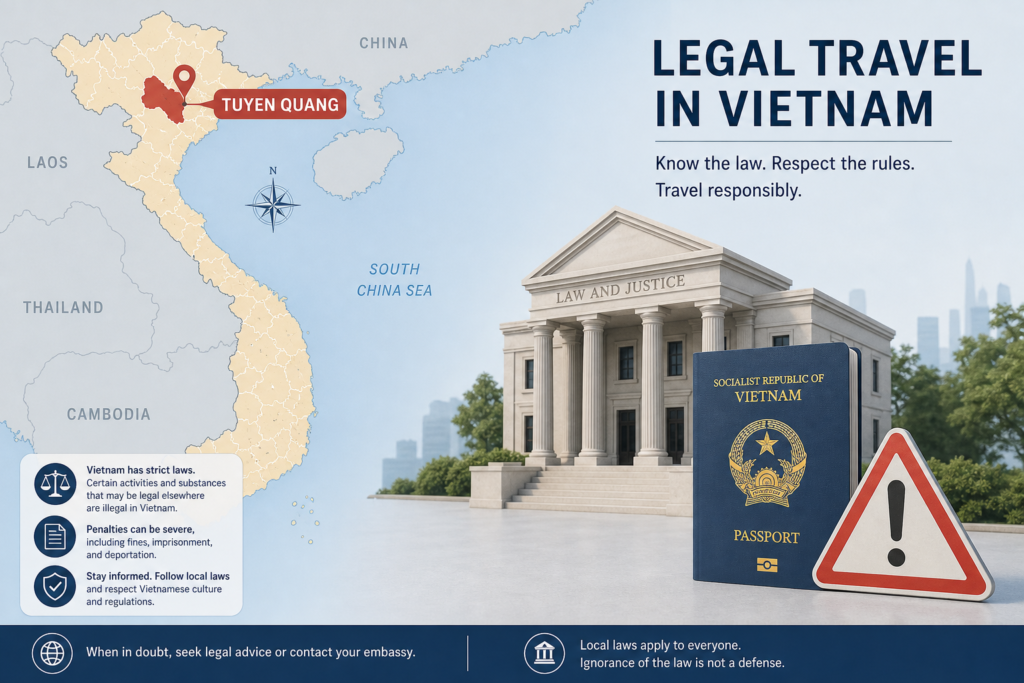
“A foreign passport protects tourists.”
Foreign visitors are subject to Vietnamese law while in Vietnam. Nationality may affect consular access and immigration consequences, but it does not create an exemption from drug controls.
“CBD, hemp, and THC are interchangeable.”
They are chemically and legally distinct concepts, but product labels are not a guarantee of Vietnamese compliance. Border officials may require proof of composition, and a product can contain controlled ingredients despite its marketing.
“If another traveler did it, it must be safe.”
Online anecdotes are not legal authority. Enforcement outcomes differ, and a person may not describe detention, testing, payment demands, or ongoing proceedings accurately.
How to verify the current position
Before traveling, consult current information from an official Vietnamese embassy or consulate, Vietnam’s customs authorities, and a Vietnamese lawyer where the product or medication is medically necessary. Use the Vietnamese legal text where possible because translations may omit important definitions or procedural details.
For broader comparison, readers can also review the article on cannabis laws in Hanoi. Hanoi is not governed by a separate cannabis legalization regime, and the same national framework is relevant when comparing Hanoi with Tuyen Quang.
Check information close to the date of travel. Rules concerning controlled medicines, testing, border declarations, and administrative procedures may be updated, and an older blog post cannot replace current official guidance.
Conclusion
Cannabis is illegal in Tuyen Quang city and throughout Vietnam. Possession, use, cultivation, purchase, sale, transport, and import can all create legal exposure, while trafficking and cross-border conduct carry especially serious risks. CBD, hemp-labelled products, edibles, and foreign medical-cannabis documents should not be assumed to provide an exception.
The safest approach is simple: do not buy, use, carry, grow, or bring cannabis products into Tuyen Quang. If police, customs, or immigration authorities become involved, remain calm, request language assistance, contact your embassy or consulate, and obtain advice from a qualified Vietnamese lawyer.